
Nutrition
Dec 15
What Should Footballers Eat? A Complete Nutrition Guide for Every Level
Football is a high-intensity sport that places huge demands on the body. Whether you are a grassroots player, academy footballer or...
Read Full Article →
Football is a high-intensity sport that places huge demands on the body. Whether you are a grassroots player, academy footballer or adult playing competitively at the weekend, what you eat has a direct impact on your energy, performance and long-term development.
Many footballers train hard but fail to fuel properly. Skipped meals, poor timing and reliance on ultra-processed food often lead to fatigue, slow recovery and inconsistent performances.
This guide explains exactly what footballers should eat, when they should eat it and why food is one of the biggest competitive advantages available.
The Three Core Nutrition Goals for Footballers
All football nutrition should support three outcomes: Energy, Build and Recovery.
Energy comes primarily from carbohydrates. Football involves repeated sprints, accelerations and changes of direction, all of which rely heavily on stored glycogen. Without enough carbohydrates, players fade late in games and struggle to train at intensity.
Build refers to muscle development and strength. Protein is essential for growing and maintaining lean muscle, particularly for young footballers going through growth spurts.
Recovery ensures the body can handle repeated training sessions and matches. Proper recovery nutrition reduces soreness, lowers injury risk and improves consistency.
What to Eat on Training Days
Training days require balanced meals spread throughout the day. A footballer should aim for:
- Lean protein such as chicken, beef, turkey or fish
- Complex carbohydrates such as rice, potatoes or pasta
- Vegetables for vitamins and minerals
- Healthy fats in moderation
Skipping meals before or after training often leads to underperformance and stalled development.
Match Day Nutrition
On match days, food should be familiar, simple and easy to digest. Heavy or greasy meals increase the risk of discomfort and sluggishness. Players should focus on carbohydrates with moderate protein and low fat.
Consistency Beats Perfection
The best diet is one a footballer can follow consistently. Regular, balanced meals beat extreme or restrictive diets every time. This is why many players choose prepared football meals to remove guesswork and stay consistent week after week.
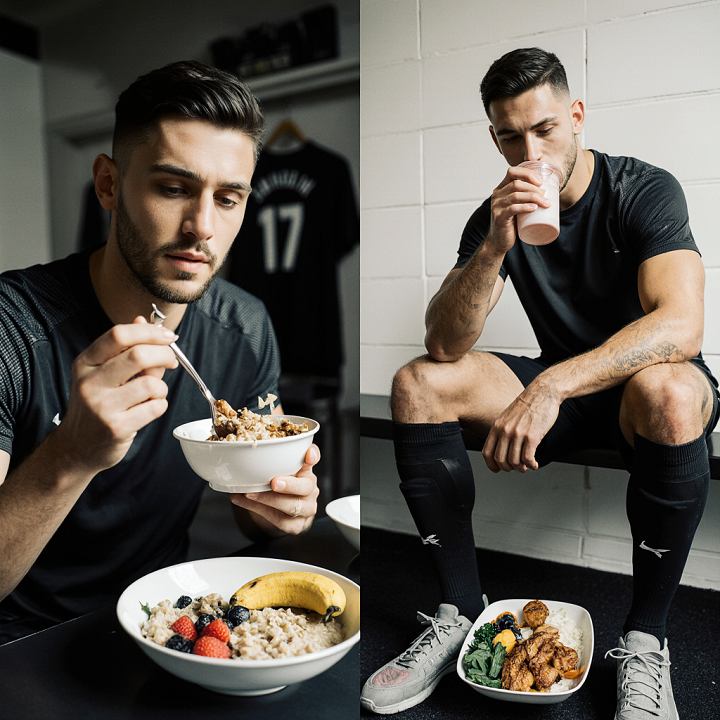
Performance
Dec 15
Match Day Meals: Exactly What to Eat Before and After a Football Match
Match day nutrition plays a major role in how a footballer performs. Starting fast, maintaining intensity and recovering properly all depend on what you eat before and after kick-off.
Read Full Article →
Match day nutrition plays a major role in how a footballer performs. Starting fast, maintaining intensity and recovering properly all depend on what you eat before and after kick-off.
The Pre-Match Meal (3–4 Hours Before Kick-Off)
This is the most important meal of the day. It should be:
- High in carbohydrates to fuel performance
- Moderate in protein
- Low in fat and spice
Examples include chicken and rice, pasta with lean meat, or potatoes with fish.
60–90 Minutes Before Kick-Off
If needed, a light snack such as a banana or small carb-based option can help top up energy stores. Avoid heavy foods close to kick-off.
Half-Time Fuel
For some players, quick-digesting carbohydrates such as fruit can help maintain intensity in the second half.
Post-Match Recovery Nutrition
Recovery should start within 60 minutes of the final whistle. This meal should include:
- Protein to repair muscle
- Carbohydrates to replenish glycogen
- Fluids to rehydrate
Skipping post-match nutrition slows recovery and increases injury risk, particularly during congested fixture periods.
Making Match Days Easier
Busy schedules often make planning difficult. Having a ready-made match day meal removes stress and ensures players fuel correctly every time.

Health
Dec 15
Meals for Young Footballers: Fueling Growth, Performance and Development
Young footballers have unique nutritional needs. They are not only training and playing football but also growing physically and mentally.
Read Full Article →
Young footballers have unique nutritional needs. They are not only training and playing football but also growing physically and mentally.
Why Nutrition Matters for Young Players
Poor nutrition in young footballers can lead to:
- Low energy levels
- Increased injury risk
- Slower growth and development
- Reduced concentration at school and training
Common Nutrition Mistakes
Many young players:
- Skip breakfast
- Rely on snacks instead of meals
- Undereat due to busy schedules
These habits can limit development over time.
What Young Footballers Should Be Eating
Young players need:
- Enough calories to support growth
- Balanced meals with carbohydrates and protein
- Regular eating times
Whole foods should always be prioritised over supplements.
Supporting Parents and Busy Schedules
Between school, training and matches, preparing balanced meals every day can be challenging. Consistent, football-focused meals help young players stay fuelled without added stress.
Recovery
Dec 15
Recovery Food for Footballers: How to Recover Faster and Train Better
Training hard is only effective if recovery is handled properly. Footballers improve during recovery, not during the session itself.
Read Full Article →
Training hard is only effective if recovery is handled properly. Footballers improve during recovery, not during the session itself.
Why Recovery Nutrition Is Essential
Without proper recovery food, players experience:
- Increased muscle soreness
- Reduced performance
- Higher injury risk
The Three Pillars of Recovery Nutrition
Protein repairs muscle tissue. Carbohydrates restore energy levels. Micronutrients support immune function and reduce inflammation.
Timing Matters
Consuming a recovery meal within an hour of training or matches significantly improves recovery outcomes.
Long-Term Benefits of Proper Recovery
Consistent recovery nutrition allows players to train harder, play more matches and develop faster across the season.
Health
Dec 15
Why Footballers Are Choosing Prepared Meals Over Traditional Meal Prep
Meal prepping is popular but often difficult to maintain alongside football training.
Read Full Article →
Meal prepping is popular but often difficult to maintain alongside football training.
The Reality of Meal Prep
Many footballers struggle with:
- Time constraints
- Inconsistent preparation
- Repetitive meals
This leads to poor consistency over time.
Why Prepared Football Meals Work
Prepared meals offer:
- Correct portions
- Performance-focused nutrition
- Reliability and convenience
Football-Specific Nutrition Matters
Generic meal prep targets weight loss or bodybuilding. Football nutrition requires different energy levels, timing and balance.
A Smarter Way to Fuel Football
Prepared football meals allow players to focus on training and performance rather than planning food.